


Free express quote
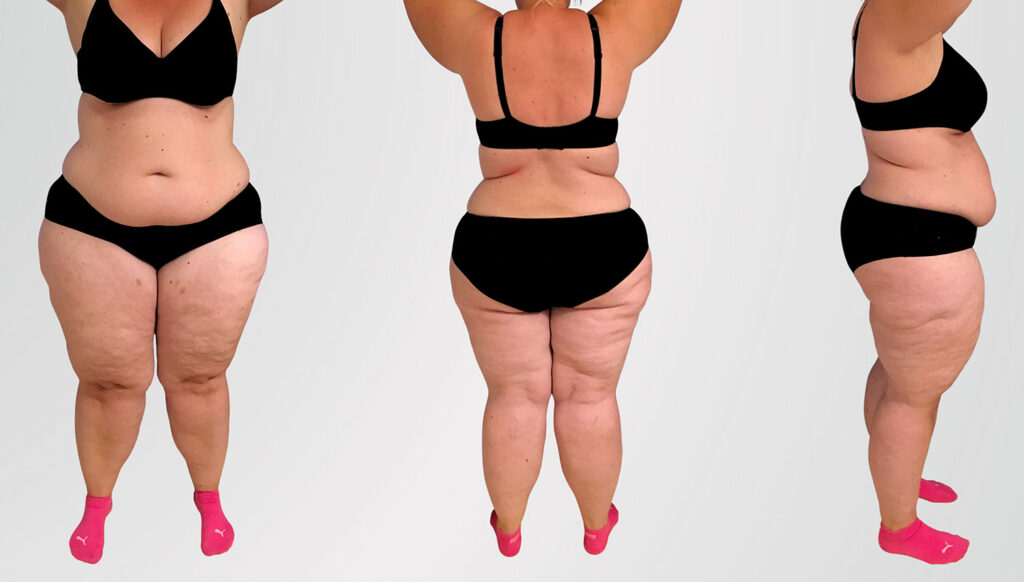
What is Lipoedema?
Lipoedema is a chronic condition characterized by an abnormal and disproportionate accumulation of fat in the legs and arms. Unlike classical obesity, lipoedema affects the extremities symmetrically and is often associated with an abnormal distribution of adipose tissue.
Main Characteristics
- Symmetrical distribution: Fat accumulates equally on both sides of the body
- Absence of foot edema: Unlike lymphedema, lipoedema generally does not affect the feet
- Pain and tenderness: Patients often report pain, easy bruising, and increased sensitivity
- Resistance to weight loss: Fat deposits do not respond to classical diets
- Onset often at puberty: Generally observed in women, particularly at puberty or menopause
Important: Lipoedema affects approximately 1 to 11% of the world population, primarily women. It is often confused with classical obesity, which leads to delayed diagnoses.
Symptoms of Lipoedema
- Symmetrical swelling of legs and arms
- Pain or irritation in affected areas
- Bruising (ecchymosis) that appears easily
- Feeling of heaviness in the legs
- Fatigue and muscle cramps
- Orange peel skin or embossed skin appearance
- Difficulty finding suitable clothing
- Psychological and social impact (discomfort, isolation)
Ideal Treatment of Lipoedema
Multidisciplinary Approach
The ideal treatment of lipoedema is based on a personalized and multidisciplinary approach combining several strategies:
1. Conservative Treatment (First-Line)
- Manual lymphatic drainage: Performed by a specialized therapist, helps reduce swelling
- Compression: Wearing graduated compression stockings or sleeves (minimum 15-20 mmHg)
- Physical exercise: Low-impact activities (swimming, walking, cycling) to improve circulation
- Balanced diet: Not to lose weight related to lipoedema, but to prevent additional weight gain
- Skin care: Hydration and infection prevention
- Psychological support: Management of emotional and social impact
2. Surgical Treatment
For patients who do not respond to conservative treatments:
- Laser-assisted lipoaspiration (LAL): Liposuction technique recognized as particularly effective for lipoedema
- Tumescent lipoaspiration: Surgical removal of accumulated fat
- Lipoabdominoplasty: For more severe cases affecting the hips and abdomen
Results: Patients report a significant reduction in pain, improved mobility, and better quality of life. Results are generally lasting when combined with conservative care.
3. Long-Term Follow-Up
- Regular consultations with the specialist physician
- Adjustment of treatment according to progression
- Maintenance of healthy lifestyle habits
- Continuous wearing of compression garments
- Periodic manual lymphatic drainage
Why Choose Tunisia for Lipoedema Treatment?
Tunisia has established itself as a leading medical destination in North Africa for lipoedema treatment. Here are the key advantages:
Medical Expertise
Highly qualified plastic surgeons and dermatologists, trained internationally with significant experience in lipoedema treatment.
Reduced Costs
The cost of procedures in Tunisia is 40 to 60% cheaper than in France or Switzerland, without compromising quality.
Modern Equipment
Private clinics equipped with the latest technology: lasers, assisted lipoaspiration, and lymphatic drainage devices.
Accessible Destination
Direct flights from most European countries, geographical proximity, and favorable climate for post-operative recovery.
Easy Communication
Doctors and staff speaking French, English, and other foreign languages for seamless communication.
Personalized Follow-Up
Personalized treatment plans, pre- and post-operative follow-up, and easy access to distance consultations.
References in Tunisia: Dr Youssef Gam & Rami Ben Salah
Tunisia counts among its specialists two essential figures in the management of lipoedema: Dr Youssef Gam and Dr Rami Ben Salah. These two practitioners distinguish themselves through specialized expertise, specific techniques adapted to lipoedematous pathology, and a strong commitment to both functional and aesthetic results.
Dr Youssef Gam — Surgeon Specialized in Lipoedema
Dr Youssef Gam is recognized as one of the pioneers of surgical treatment of lipoedema in Tunisia. His international training and clinical practice have enabled him to develop a rigorous approach centered on the specific needs of patients with lipoedema, clearly distinguishing this pathology from common obesity.
Specific Techniques Used
- Gentle tumescent lipoaspiration (WAL — Water Assisted Liposuction): Technique privileging the preservation of lymphatic structures, essential in lipoedema to prevent any worsening of lymphatic drainage
- Vibration-assisted lipoaspiration (PAL): Reduces tissue trauma and allows more homogeneous treatment of extensive lipedematous areas
- Staged multi-session approach: Dr Gam advocates step-by-step management for advanced stages, limiting physiological stress and optimizing lymphatic recovery
- Systematic association with pre- and post-operative lymphatic drainage: Integrated protocol with specialized physiotherapists to prepare tissues and consolidate results
- In-depth diagnostic consultation: Clinical differentiation of lipoedema / lymphedema / obesity before any therapeutic decision
Dr Rami Ben Salah — Expert in Plastic and Reconstructive Surgery
Dr Rami Ben Salah is a recognized reference in the field of plastic surgery in Tunisia, with marked specialization in adipose tissue pathologies including lipoedema. His approach combines surgical precision and a holistic vision of the patient’s well-being.
Specific Techniques Used
- Laser-assisted lipoaspiration (LAL / LASER Lipo): Promotes skin retraction and reduces post-operative irregularities frequent in cases of lipoedema with distensible skin
- Body mapping technique: Precise preoperative analysis of affected areas to plan priority treatment zones and preserve lymphatic corridors
- Controlled superficial lipoaspiration: Layered approach allowing progressive smoothing while respecting subcutaneous vascularization
- Management of combined lipoedema-lymphedema stages (lipo-lymphedema): Adapted protocols for cases where both pathologies coexist
- Photographic and volumetric follow-up: Objective evaluation of results at each stage of treatment
Why these two specialists? Dr Youssef Gam and Dr Rami Ben Salah share a common philosophy: treating lipoedema as a pathology in its own right and not as a simple excess of fat. Their mastery of techniques preserving the lymphatic system, their rigorous pre- and post-operative support, and their combined experience make them solid references for patients wishing to be treated in Tunisia.
J-Plasma: A Treatment Not Suitable for Lipoedema
In the context of medical tourism and the popularization of body rejuvenation techniques, J-Plasma (also marketed as Renuvion) is generating increasing interest. However, this technology has characteristics that make it fundamentally unsuitable — even contraindicated — in the treatment of lipoedema.
What is J-Plasma / Renuvion?
J-Plasma is a device that combines helium energy (cold plasma) and radiofrequency to cause sub-dermic skin retraction. It is primarily used after lipoaspiration to tighten sagging skin in patients presenting with classical adipose excess. Its action is based on intense and immediate thermal contraction of subcutaneous tissue.
Why is it Unsuitable for Lipoedema?
1. Risk of Destruction of the Lymphatic Network
Lipoedema is fundamentally linked to a dysfunction of the subcutaneous lymphatic system. The application of intense heat and plasma energy in this fragile layer risks irreparably damaging residual lymphatic capillaries, thereby worsening lymphatic stasis and accelerating progression toward lipo-lymphedema.
2. Aggravated Inflammation and Fibrosis
Lipedematous tissue is by nature inflammatory and fibrotic. The thermal energy of J-Plasma stimulates additional inflammatory cascades and promotes the formation of scar tissue (fibrosis), which can harden treated areas, increase the chronic pain characteristic of lipoedema, and compromise any future intervention.
3. Inappropriate Skin Retraction
Unlike classical obesity where excess skin is the main problem, in lipoedema it is the pathological adipose accumulation that takes priority. Forced retraction by J-Plasma on lipedematous tissue can create unequal tensions, severe surface irregularities, and significant post-operative pain.
4. Absence of Validated Clinical Data
To date, no serious clinical study has validated the use of J-Plasma specifically in the treatment of lipoedema. International recommendations from lipoedema specialists (ISLS, SMTFL) do not mention this technology among recognized approaches for this pathology.
5. Possible Worsening of Symptoms
Lipedematous patients already present marked pain hypersensitivity in affected areas. Use of J-Plasma could durably intensify this pain, generate difficult-to-resolve reactive edema, and significantly degrade post-operative quality of life.
⚠ Warning: If you have lipoedema and a practitioner proposes J-Plasma / Renuvion as part of your treatment, we strongly recommend seeking a second opinion from a recognized lipoedema specialist before any decision. Techniques suitable for lipoedema are gentle tumescent lipoaspiration (WAL), PAL, and LAL — performed by surgeons specifically trained in this pathology.
Frequently Asked Questions
Can lipoedema be cured?
Lipoedema cannot be completely cured, but it can be managed effectively. Conservative and surgical treatments allow for significant reduction of symptoms and improvement in quality of life. Regular follow-up and adoption of good habits are essential to maintain results.
What is the difference between lipoedema and lymphedema?
Lipoedema is a symmetrical accumulation of fat without foot edema, while lymphedema is caused by lymphatic system failure and generally affects the feet as well. Lipoedema is more of an adipose deposit condition, while lymphedema involves retention of lymphatic fluid.
Can men have lipoedema?
Although lipoedema is much more common in women (90% of cases), men can also suffer from it. However, in men, the condition is often more severe and diagnosed later due to its rarity.
How long does recovery take after an intervention?
Recovery varies depending on the extent of the intervention. Generally: 1-2 weeks to resume light activities, 4-6 weeks for normal activities, and 3-6 months for complete results. Continuous compression wear is recommended during this period.
Is lipoaspiration permanent?
Lipoaspiration provides lasting results for lipoedema. However, without maintenance of good lifestyle habits, some re-accumulation may occur over time. This is why ongoing follow-up and conservative treatment are important.
What is the cost of an intervention in Tunisia?
The cost varies depending on the extent of the area treated and the technique used. Generally, laser-assisted lipoaspiration in Tunisia costs between 2,500 and 5,000 euros, compared to 6,000 to 12,000 euros in Europe. We recommend requesting a personalized quote after consultation.
Should compression be worn for life?
Compression is generally recommended long-term, if not for life, to maintain results and manage symptoms. However, the intensity may decrease over time. Your doctor will determine the best compression plan according to your specific condition.
A Propos De l'Auteur

Je m'appelle Ayline. Je suis journaliste et rédactrice du blog Medespoir Esthétique Turquie. J'ai obtenu un Master 2 en Information et Communication spécialisé santé. J'ai 5 ans d'expérience dans l'écriture sur le web santé et bien-être.
Passionnée par le domaine de l'esthétique médicale depuis longtemps, j'ai créé mon blog il y a 3 ans pour informer et conseiller les personnes intéressées par la chirurgie et médecine esthétique.
Mon objectif est de vulgariser ces sujets parfois complexes, de démystifier certaines idées reçues et d'aider à y voir plus clair parmi l'offre abondante.
Je réalise des articles pédagogiques, je donne mon avis sur les dernières innovations, je compare les offres entre pays, je teste de nouvelles cliniques.
Je publie également régulièrement des portraits détaillés de chirurgiens esthétiques renommés en Turquie, en France et à l'international.
Grâce à mon expérience d'écriture et ma curiosité, je sais rendre mes sujets accessibles à tous tout en gardant un regard critique et bienveillant.
